Friday, January 20, 2012
Toyota reveals NS4 Advanced Plug-In Hybrid Concept
DETROIT (TMS/PRNewswire) -- Toyota Motor Sales, USA revealed the NS4 advanced plug-in hybrid concept vehicle at the 2012 North American International Auto Show (NAIAS) in Detroit. The NS4 signifies Toyota’s vision for future mobility with a focus on connectivity and the human interface.
Toyota engineers were challenged to design a new mid-sized concept for potential global market introduction by 2015. The NS4 concept is a dedicated plug-in hybrid, separate from the Prius family, designed with future mobility requirements in mind.
“In this digital age, cars are becoming another spoke in the wheel of our electronic connectivity,” said Jim Lentz, TMS president and chief operating officer. “NS4 demonstrates Toyota’s take on the human connection to the car with technology that considers both emotional and rational relationships, person-to-car and car-to-society.”
NS4’s advanced powertrain targets a next-generation Hybrid Synergy Drive plug-in system featuring reductions in component size and weight with improved overall fuel economy, better acceleration and longer all-electric range, while maintaining a short charge time.
Thursday, December 16, 2010
Lexus announces pricing for new CT 200h Hybrid
![]() |
| 2011 Lexus CT 200h Photo Credit: Lexus |
Lexus has announced pricing for the all-new 2011 CT 200h hybrid, which arrives in dealer showrooms next spring, and the number comes in under $30,000. The suggested retail price of the CT 200h will be $29,995 including the delivery, processing and handling fee.
![]() |
| 2011 Lexus CT 200h Photo Credit: Lexus |
“For just $1,000 more than the cost of a non-luxury hybrid, buyers can indulge in a CT 200h with our proven Lexus Hybrid Drive technology,” said Mark Templin, group vice president and general manager, Lexus Division. “Lexus hybrids currently make up 90 percent of all luxury hybrid sales in the U.S., so you can imagine how excited we are to continue our leadership in this market with the CT 200h.”
The CT 200h emits approximately 60 percent fewer smog-forming emissions than the average new car, and has EPA-estimated ratings of 43 mpg city and 40 mpg on the highway running on regular unleaded gasoline. The CT 200h also can be operated in a switchable EV mode which generates zero emissions.
The 2011 CT 200h arrives in early March when it will become the fifth hybrid in the Lexus lineup.
Wednesday, November 17, 2010
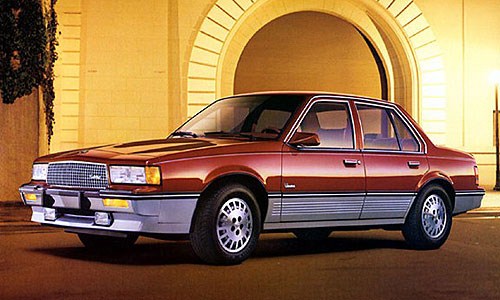
Deja Vu: A subcompact Cadillac?!?
![]() |
| 1982 Cadillac Cimarron Photo Credit: GM Media |
![]() |
| 2011 Cadillac Urban Luxury Concept Photo Credit: GM Media |
But, before condemning the concept, I jumped out of bed and got online to search for more information and photos, of course. I needed to see this concept. Wow... I'm impressed.
“While small in size, this concept is an exploration of what Cadillac could be in the future, as the brand continues to focus on redefining industry standards for advanced vehicle design and integrated technology,” said Don Butler, vice president for Cadillac marketing.
Sunday, February 14, 2010
Test Drive: 2010 Lexus HS250h
Most Lexus models are known for luxury with a dose of powerful sportiness. Most hybrids—take the Toyota Prius for instance—are known for oddly unique looks and gas miserly performance. Enter the new HS250h. It works if you like and want typical hybrid performance. It does not work if you like and want a true Lexus.
Yes, the HS250h provides Lexus comfort and luxury. Leather seating, automatic dual-zone climate control, premium audio system and more are standard. There is ample rear seat comfort and a sizable trunk that can accommodate a standard set of golf clubs, bag and all. But I never got past feeling like I was in an overdressed Toyota Prius. The two models share the same basic platform but the HS250h is longer, wider and taller than the Prius.
The deal breaker would be the lackluster performance compared to other Lexus models. In every Lexus I have ever driven, step on the gas pedal and you get instant acceleration gratification from the V-6 and V-8 powertrains. Step on the gas pedal in the HS and the high-tech electric motors and four-cylinder gasoline engine provide acceleration that left me wondering if I was in a base model Toyota Corolla instead of a Lexus.
On the plus side, my HS250h test model achieved 34.9 miles per gallon, essentially matching the EPA estimate of 35 mpg. While alternative energy advocates will argue the impressive fuel economy is the goal, I would give up a few miles per gallon to have the electric motor mated to a V-6 gasoline engine and achieve the more spirited performance Lexus customers have come to expect. If the RX450h utility vehicle can produce 32 mpg in city driving, I would be willing to bet an HS350h could produce at least the same.
I did like the joystick controller for the multi-information display. It was comfortably situated on the center console and combined many features of a traditional joystick and a computer mouse allowing the driver to easily manipulate features with minimal distraction.
Optional features included wide view front monitor with backup camera; an upgraded Mark Levinson audio system with 15-speakers and 6-disc in-dash DVD changer; Navigation system; and the Tech Package including a head-up display, front & rear park assist, radar cruise control which helps maintain a designated distance from the vehicle in front of you; and a feature Lexus calls Lane Keep Assist which warns you if you drift out of your lane.Tuesday, February 9, 2010
2010 Prius and Lexus HS250h models among latest Toyota recall
Quality control issues continue at Toyota. The Japanese automaker has announced another major recall involving hundreds of thousands of vehicles.
"We're committed to doing everything we can-- as fast as we can-- to restore consumer trust in Toyota, and these recalls are part of this effort," said Jim Lentz, President and Chief Operating Officer of Toyota Motor Sales. "We regret the inconvenience this recall will cause to Prius and HS 250h owners, and will do our best with the support of our dealers to make sure that it is conducted in the most trouble-free manner possible."Wednesday, May 6, 2009
News: Ford to Build Next Generation Focus at Former SUV Plant
Ford Motor Company is making a major investment that will bring its Michigan Assembly Plant in Wayne back to life with a new mission.Ford announced it is investing $550 million to transform Michigan Assembly into a "lean, green and flexible manufacturing complex" that will build Ford’s next-generation Focus global small car, including a new battery-electric version of the for the North American market.
The plant, formerly the production site for Ford Expedition and Lincoln Navigator SUVs, is one of three light truck plants Ford is retooling to build fuel-efficient global small cars in the coming years. The new Focus will begin rolling off the line next year and the battery-electric version – Ford’s first all-electric passenger car – debuts in 2011.
“The transformation of Michigan Assembly Plant embodies the larger transformation under way at Ford,” said Ford President and CEO Alan Mulally. “This is about investing in modern, efficient and flexible American manufacturing. It is about fuel economy and the electrification of vehicles. It is about leveraging our expertise and vehicle platforms around the world and partnering with the UAW to deliver best-in-class global small cars. It is about skilled and motivated teams working together in new ways to create the future of automobile manufacturing in the United States.”
As part of the retooling, Ford will consolidate its operations from Wayne Assembly Plant. When production launches in 2010, approximately 3,200 employees will be building the new Focus at Michigan Assembly Plant.
Tuesday, May 5, 2009
News: Certain Plug-In Electric Vehicles May Qualify For Tax Credit
WASHINGTON (IRS Newswire) — Plug-in electric vehicles using certain types of batteries may qualify for a new tax credit if purchased this year, the Internal Revenue Service said. The Emergency Economic Stabilization Act of 2008 (EESA) and the American Recovery and Reinvestment Act of 2009 (ARRA) created two new tax credits for various types of electric vehicles, which may include what are commonly referred to as neighborhood electric vehicles.
ARRA creates a tax credit for low-speed or two- or three-wheel electric vehicles, such as motor scooters, purchased after Feb. 17, 2009, and before Jan. 1, 2012. The amount of the credit is 10 percent of the cost of the vehicle, up to a maximum credit of $2,500. To qualify, a vehicle must be either a low-speed vehicle that is propelled to a significant extent by a rechargeable battery with a capacity of at least 4 kilowatt hours or be a two- or three-wheeled vehicle that is propelled to a significant extent by a rechargeable battery with a capacity of at least 2.5 kilowatt hours.
EESA created a tax credit for vehicles that have at least four wheels and draw propulsion using a rechargeable traction battery with at least four kilowatt hours of capacity. For 2009, the minimum credit is $2,500 and the credit tops out at $7,500 to $15,000, depending on the weight of the vehicle and the capacity of the battery.
During 2009, low-speed, four-wheeled vehicles manufactured primarily for use on public streets, roads and highways (neighborhood electric vehicles) may qualify both for the EESA credit and, if purchased after February 17, 2009, for the ARRA credit for low-speed electric vehicles. A taxpayer may not claim both credits for the same vehicle. Vehicles manufactured primarily for off-road use, such as for use on a golf course, do not qualify for either credit.
The Internal Revenue Service is working on guidance regarding certification procedures for both of these credits.
Saturday, May 2, 2009
Auto Test: 2009 BMW X5 xDrive35d
I very distinctly remember my father’s 1979 Oldsmobile Toronado with a 5.7 liter V-8 diesel engine. If we were outside playing in the driveway, we could hear Dad arriving home from work when he was still two or three blocks away. Thirty years ago, that was the norm for diesel engines. They were large and loud. Not anymore. When the new 2009 BMW X5 xDrive35d arrived in my driveway the first thing I said to the delivery driver was, “this is a diesel?” I was already impressed because it was so quiet.
The X5 xDrive35d is one of two diesel powered models BMW sells in the United States. Joining the oil burning sports activity vehicle is the 335d sedan. Both part of the automaker’s growing Advanced Diesel lineup. Advanced Diesel uses new technology to meet strict federal standards regarding diesel emissions, which in the past were always black, sooty and smelly. Ultra low sulfur diesel fuel with 97-percent less sulfur content—15 parts per million compared to 500 parts per million previously—burns much more cleanly but still produces nitrogen oxide and soot. Through the use of a urea solution, which is injected into the catalytic process, nitrogen oxide is greatly reduced and soot is captured and burned away in the particulate filter. What comes out of the tailpipes is no dirtier and no more harmful than gasoline exhaust. This is a major step forward for diesel engines.I stood behind the X5 xDrive35d thinking I would see, at least, some exhaust. Much to my surprise, I did not. I also could not smell any exhaust. No noise, no smoke, no smell. Impressive. Here are my thoughts on the X5 xDrive35d after spending a week with the vehicle.
Appearance
The diesel powered X5 looks no different than the gas powered X5. Its outward appearance is that of a luxury SUV, or in this case, SAV. Aggressive, yet elegant. The look is unmistakably BMW. The test model is equipped with 19-inch wheels and matching performance tires which provide a smooth, quiet ride.
The X5 comes in ten available colors including eight metallic choices.
Power
If you are unfamiliar with diesel engines, don’t let the relatively low 265 horsepower figure fool you. Torque is plentiful at 425 lb-ft which means the X5 has plenty of get-up-and-go. BMW claims the 3.0 liter twin-turbocharged inline six cylinder engine will catapult you from 0-60 MPH in 6.9 seconds. The vehicle accelerates quickly. So quickly, I forgot it was a diesel for a while.Fuel efficiency is the diesel engine’s best attribute. The X5 xDrive35d has an EPA fuel economy rating of 19 MPG in the city and 26 MPG on the highway. My actual mileage easily matched those estimates, under spirited driving conditions.
Comfort
Inside, the X5 has what you would expect from a luxury vehicle: front and rear leather seating for five people; automatic, digital dual-zone climate control; more than ample leg, head and shoulder room; all in a nice, quiet cabin. Once sealed inside, outside noise is held to a bare minimum while driving.
Features
Standard features include all-wheel drive, dynamic stability control, tire pressure monitor and rain-sensing windshield wipers among several others. The test model was well equipped with option features including premium sound system, active ventilated driver’s seat, rear-view camera and navigation system among other options. I think this vehicle had every possible option package added. While that certainly created a comfortable ride, it also created an additional $20,720 dollars in sticker shock. I do like the full iPod integration feature. I’ve never had true compatibility in a vehicle and the ability to access my full library through the car sound system is great. Also, BMW has apparently made great improvements to the iDrive vehicle information system. When first introduced, the system was not well received. It’s still a bit more difficult to navigate than I would like, but it is manageable.
Summary
Nice vehicle. But I prefer a true sports utility vehicle. The X5 is a wonderfully engineered road handler but since it looks like an SUV, it should act like an SUV. The diesel engine is a winner. I would love to drive the 335d and take advantage of its 36 MPG highway rating.

Going Green: Clean Diesel Technology
Diesel has not been popular on the U.S. consumer market because the engines were significantly noisier and produced smelly, soot-filled exhaust. However, new federal guidelines have produced new technology that nearly eliminates all of those concerns.
I recently tested the 2009 BMW X5 xDrive35d, a clean diesel powered sports utility vehicle. Compared to its gasoline powered version, the X5 diesel is much quieter than expected, produced no noticeable odor, and achieved significantly better fuel economy.
Clean Diesel Information
BMW Advanced Diesel
Mercedes Benz BlueTEC
Mercedes Benz offers diesel engines in ML, GL and R class models.
Going Green: Plug-In Hybrid Cars
In April 2008, I spoke with a plug-in hybrid advocate who made a presentation to the Columbia City Council.